Image: Wikimedia Commons / Public Domain
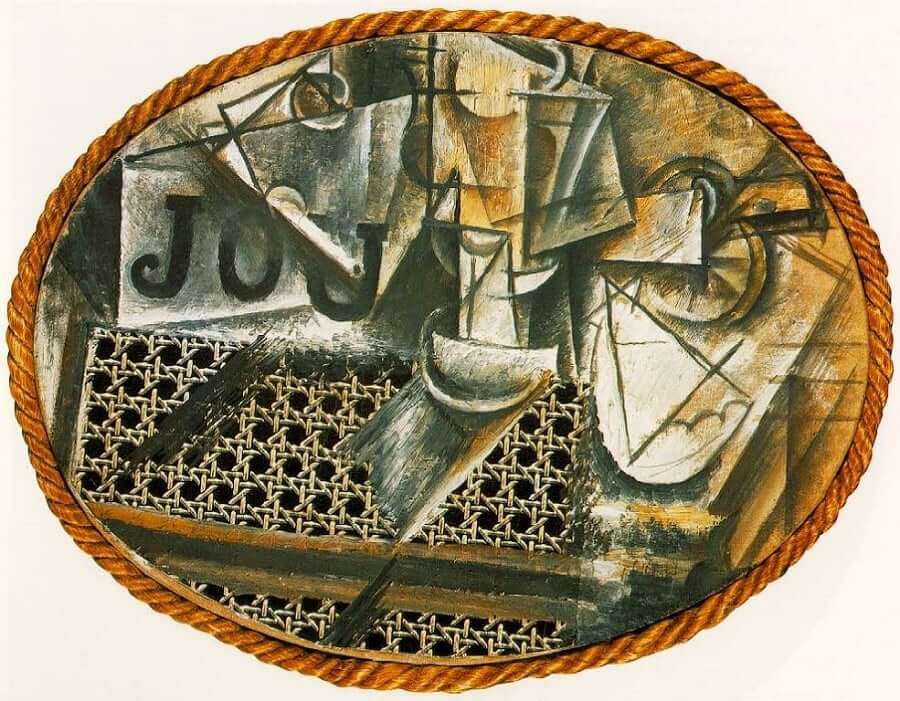
View source →Still Life with Chair Caning
Pablo Picasso, 1912
Technical Details
Medium
Oil and oilcloth on canvas, rope frame
Dimensions
29 × 37 cm (11.4 × 14.6 in)
Style
Collage / Synthetic Cubism
Decade
1910s
About This Work
This small, oval-shaped work represents a watershed moment in modern art, marking the invention of collage and the beginning of Synthetic Cubism. In this groundbreaking piece, Picasso pasted a piece of commercially printed oilcloth, designed to mimic chair caning, directly onto the canvas. He then framed the composition with a length of actual rope, which serves as both a literal frame and a conceptual boundary. By incorporating mass-produced, real-world objects (a technique known as 'papier collé' or collage) into the painting, Picasso profoundly disrupted the centuries-old illusionistic tradition of painting, challenging the viewer's perception of reality and representation. The work blurs the lines between art and everyday life, inviting a new way of seeing and interpreting artistic creation.
Created in 1912, 'Still Life with Chair Caning' emerged during a period of intense experimentation for both Picasso and Georges Braque, as they pushed the boundaries of Analytic Cubism towards Synthetic Cubism. The introduction of collage elements was a radical innovation, allowing Picasso to explore the relationship between art and reality in a novel way. The oilcloth, with its trompe l'oeil effect of chair caning, questions the very nature of artistic illusion, while the rope frame emphasizes the object-like quality of the artwork itself. This piece is not merely a painting but an assemblage, a 'construction' that paved the way for future developments in modern art, including Dada, Surrealism, and Pop Art. It is a testament to Picasso's relentless pursuit of new visual languages and his desire to challenge established artistic conventions.
Current Location
Musee National Picasso-Paris, Paris, France
Public Collection — Open to visitors
Visit museum website →Valuation & Provenance
2026 Estimated Value
$60–100 million (est.)
* Estimates are based on comparable auction results and market analysis. Not a formal appraisal.
Last Known Sale
No public auction record — held in permanent museum collection
Personal Photo — Museo Picasso Málaga
Photographed in person at the Museo Picasso in Málaga, Spain.
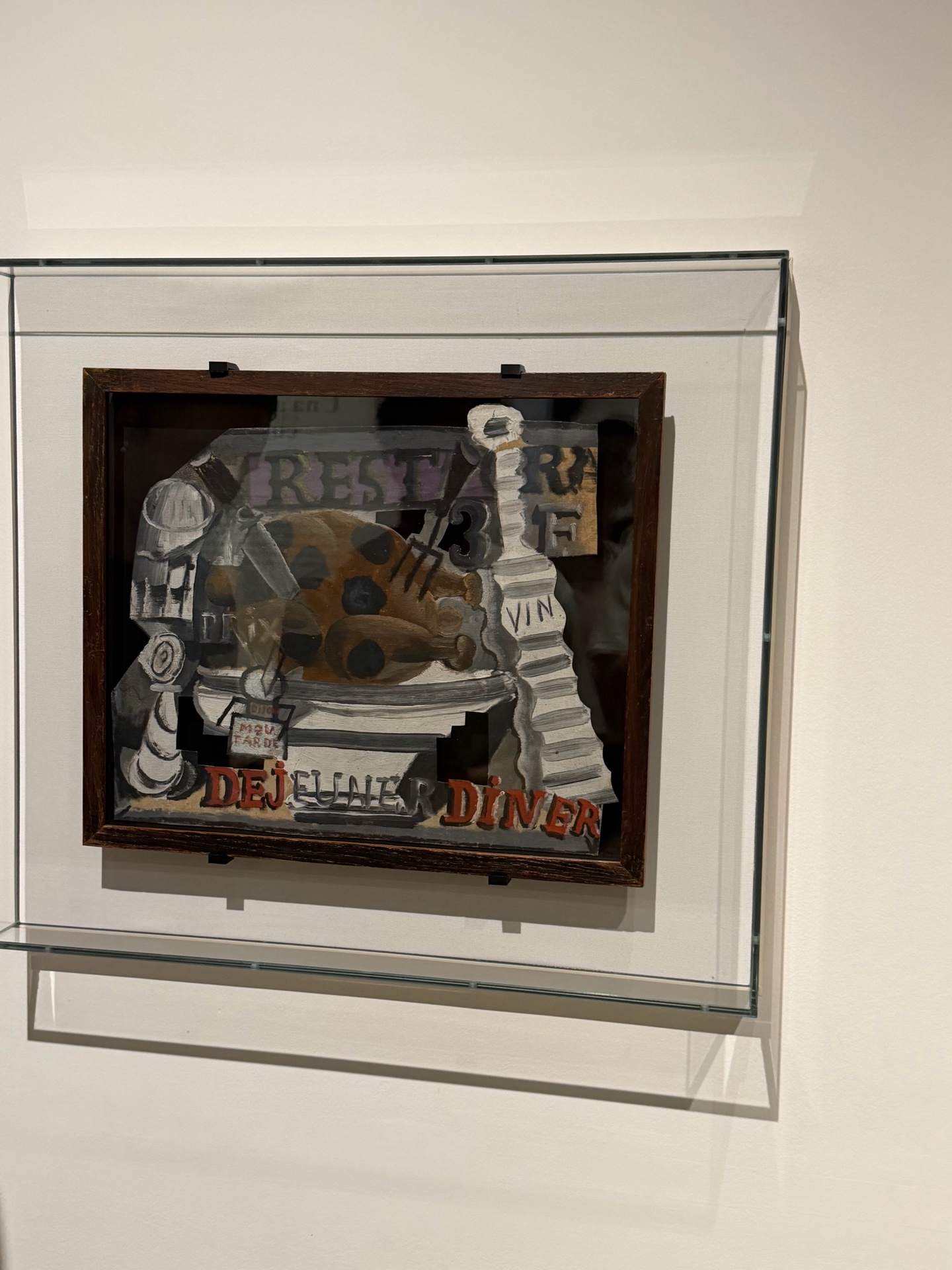
Restaurant (Nature morte au restaurant)
Photo: Dr. Eric Madrid, Museo Picasso, Málaga, Spain
View all Málaga photos →Keywords
Continue Exploring
Related Artworks
Chosen for shared style, era, medium, subject, or date.
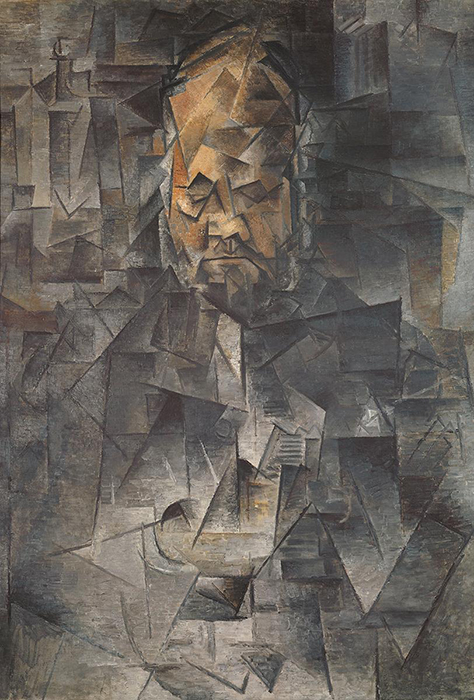
Portrait of Daniel-Henry Kahnweiler
1910 · same era · similar medium
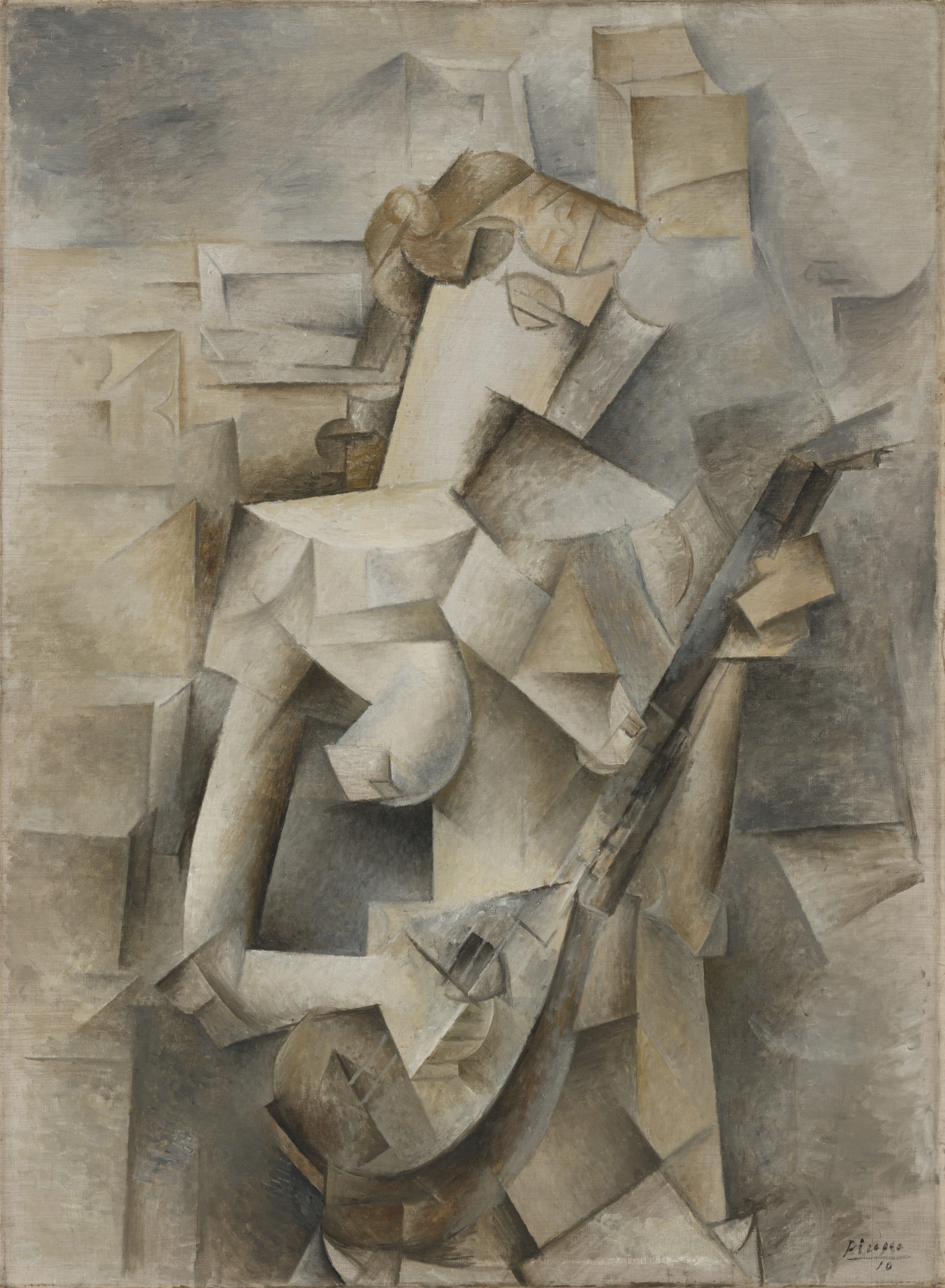
Girl with a Mandolin
1910 · same era · similar medium
Portrait of Ambroise Vollard
1910 · same era · similar medium
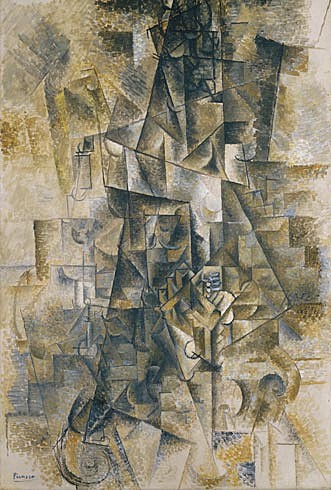
The Accordionist
1911 · same era · similar medium
Pipe Rack and Still Life on a Table
1911 · same era · similar medium
Still Life with a Bottle of Rum
1911 · same era · similar medium
Shop Related Products
If you love this analytic cubism masterpiece, explore these curated books and resources on Amazon.
The Cubist Epoch by Douglas Cooper
In-depth analysis of Picasso's Cubist period and innovations
Picasso and Braque Go to the Movies
Explores the influence of cinema on Cubist artists
Cubism Series Posters
Collection of Cubist compositions showcasing geometric innovation
As an Amazon Associate, we earn from qualifying purchases. Each product link is unique to help us track which recommendations resonate most with our visitors.