Life & Legacy

Pablo Picasso: A Life in Art

1881 – 1973

Quick Facts

BornOct 25, 1881
BirthplaceMálaga, Spain
DiedApr 8, 1973
Age91 years
Works20,000+
Estate (1973)~$500M
01

The Prodigy of Málaga (1881–1895)

Pablo Ruiz Picasso was born on October 25, 1881, in Málaga, a port city on the southern coast of Spain. He was the first child of José Ruiz Blasco, a painter and art teacher, and María Picasso López. From the very beginning, Picasso's life was marked by an almost supernatural artistic precocity. According to family legend, his first word was 'piz,' a shortened form of 'lápiz,' the Spanish word for pencil. His father, who recognized his son's extraordinary talent almost immediately, began giving him formal instruction in drawing and painting at an unusually young age.

By the age of thirteen, Picasso's technical skill had already surpassed that of his father. Don José, in an act of remarkable paternal humility, reportedly handed his own palette and brushes to his son, declaring that he himself would never paint again. The family relocated to Barcelona in 1895, where Don José had secured a position at the School of Fine Arts (La Llotja). Pablo passed the entrance examination for the advanced class in a single day — a feat that normally took a month — astonishing the examining professors.
02

Barcelona and the Bohemian Circle (1895–1900)

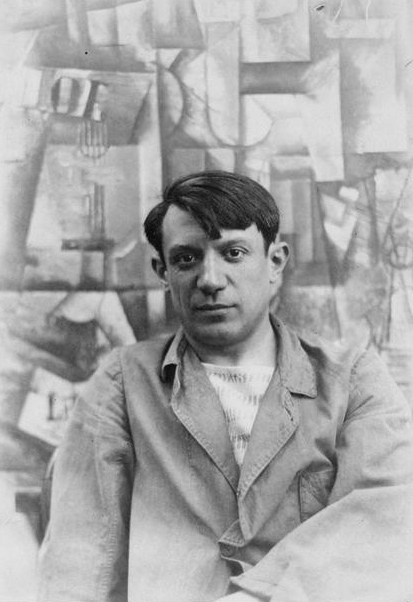
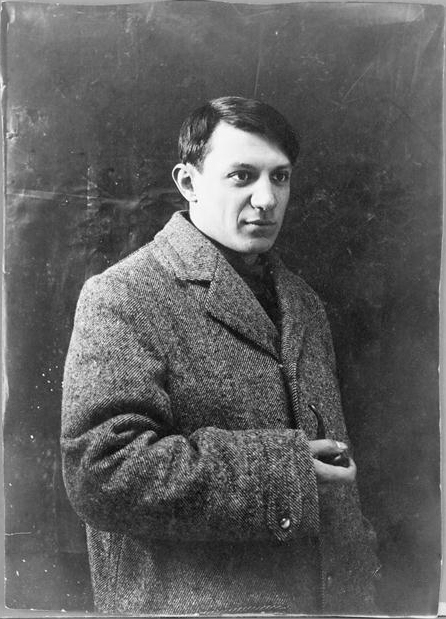
Pablo Picasso, c. 1908

Pablo Picasso, c. 1908

Portrait de Picasso, 1908 · Public Domain · Wikimedia Commons

Barcelona in the late 1890s was a city electrified by modernism, anarchism, and artistic experimentation. The young Picasso quickly became a fixture at Els Quatre Gats ('The Four Cats'), a café modeled on the Parisian Chat Noir that served as the headquarters of the Catalan modernist movement. Here he met the poets, painters, and intellectuals who would become his first circle of friends and collaborators, including the painter Santiago Rusiñol and the poet Joan Maragall.

During this period, Picasso produced work of remarkable maturity, including the large allegorical canvas Science and Charity (1897), which won a gold medal at the Provincial Exhibition in Málaga and an honorable mention at the National Fine Arts Exhibition in Madrid. He also spent a brief, unhappy period at the Royal Academy of San Fernando in Madrid before returning to Barcelona, preferring the freedom of self-directed study to the rigidity of academic instruction. His first solo exhibition was held at Els Quatre Gats in February 1900.

03

Paris and the Blue Period (1900–1904)

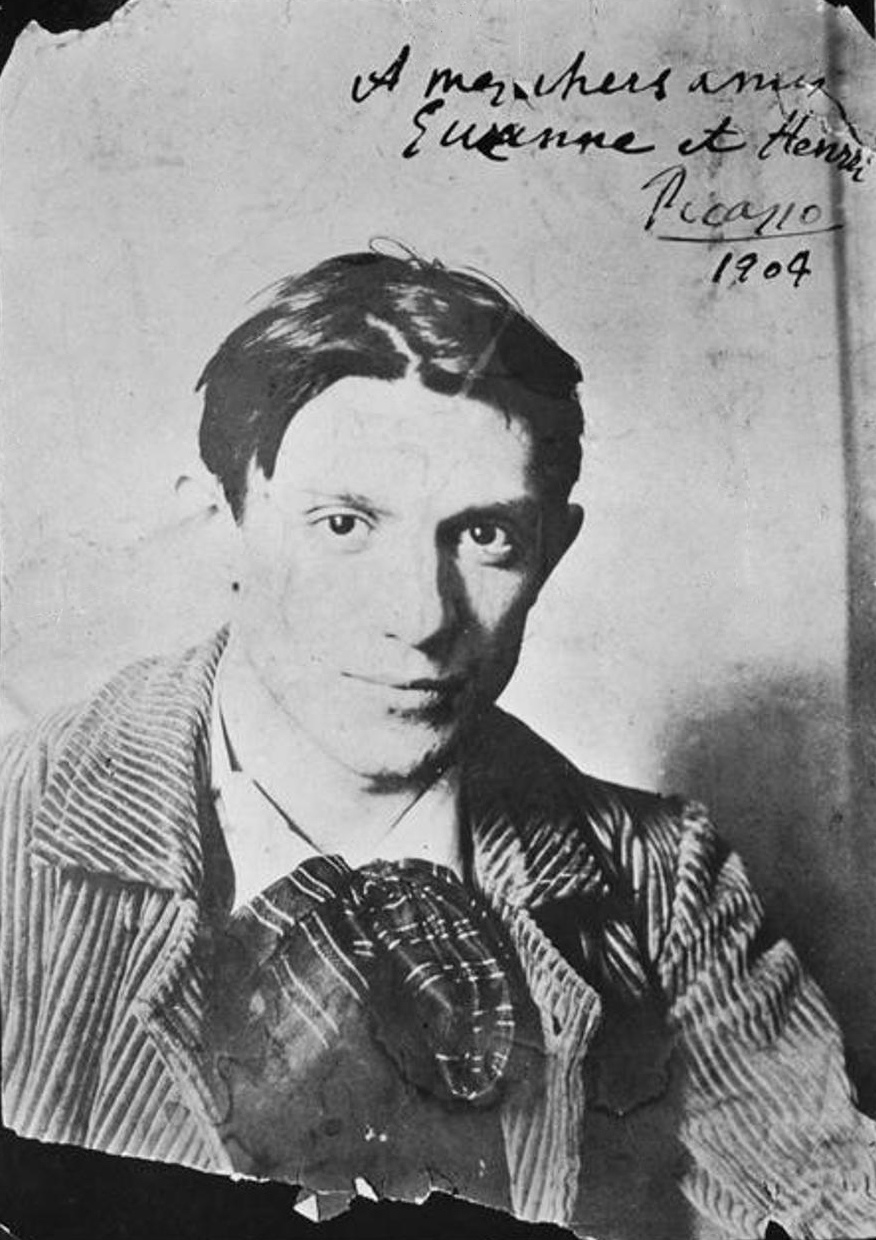
Picasso in Paris, 1904. Signed portrait photograph.

Picasso in Paris, 1904. Signed portrait photograph.

Photo by Ricard Canals i Llambí, 1904 · Public Domain · Wikimedia Commons

In October 1900, Picasso made his first trip to Paris, the undisputed capital of the art world. He was immediately captivated and devastated in equal measure by the city's energy, poverty, and creative ferment. He absorbed the lessons of the Post-Impressionists — Toulouse-Lautrec, Degas, and Van Gogh — with remarkable speed, producing works that showed a confident command of their techniques.

The defining trauma of this period was the suicide of his closest friend, the painter Carles Casagemas, in February 1901. Casagemas shot himself in a Paris café after a failed love affair. Picasso was shattered. The grief triggered a profound artistic transformation. Beginning in 1901, he began painting almost exclusively in shades of blue and blue-green, depicting the marginalized figures of Parisian and Barcelonan society — the blind, the poor, the imprisoned, the grieving. The Blue Period (1901–1904) produced some of the most emotionally devastating works in the history of Western art, including La Vie (1903) and The Old Guitarist (1903–04). Picasso was living in extreme poverty during these years, sometimes burning his own drawings for warmth.

04

The Rose Period and Fernande Olivier (1904–1906)

Picasso in Paris, 1904 — the year he met Fernande Olivier.

Picasso in Paris, 1904 — the year he met Fernande Olivier.

Photo by Ricard Canals i Llambí, 1904 · Public Domain · Wikimedia Commons

In 1904, Picasso settled permanently in Paris, taking up residence in a ramshackle building in Montmartre known as the Bateau-Lavoir ('The Laundry Boat'). That same year, he met Fernande Olivier, a beautiful artist's model who became his first great love. Her presence transformed his art. The cold, monochromatic blues gave way to warmer pinks, roses, and terracottas. The despairing outcasts of the Blue Period were replaced by the more romantic, if equally melancholic, figures of circus performers — acrobats, harlequins, and saltimbanques.

The Rose Period (1904–1906) is characterized by a lighter, more lyrical touch. The Family of Saltimbanques (1905), a monumental canvas now in the National Gallery of Art in Washington, is the defining masterpiece of this era. Picasso's circle expanded dramatically during these years to include the poets Guillaume Apollinaire and Max Jacob, the writer Gertrude Stein (who became one of his most important patrons and collectors), and the art dealer Ambroise Vollard.

05

The African Period and the Birth of Cubism (1906–1909)

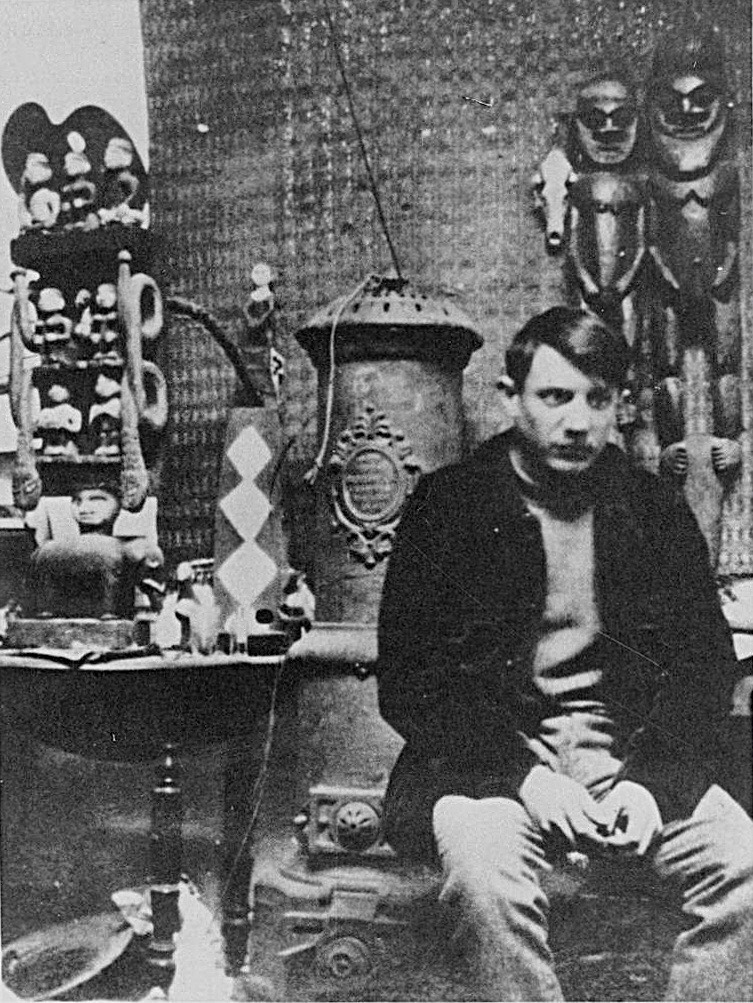
Picasso in his Montmartre studio, 1908, surrounded by African sculptures and masks.

Picasso in his Montmartre studio, 1908, surrounded by African sculptures and masks.

Pablo Picasso in his Montmartre studio, 1908 · Public Domain · Wikimedia Commons

In the summer of 1906, Picasso visited the remote Spanish village of Gósol with Fernande. He returned to Paris profoundly changed, his art moving toward a new, more austere and sculptural simplicity influenced by ancient Iberian stone carvings he had seen at the Louvre. He also made a decisive encounter with African tribal art at the Trocadéro ethnographic museum, an experience he described as a 'revelation.'

These influences converged in the creation of Les Demoiselles d'Avignon (1907), a large, shocking canvas depicting five prostitutes in a Barcelona brothel. The painting abandoned Western conventions of perspective and beauty, fracturing the figures into jagged, angular planes and replacing the faces of two of the women with African mask-like forms. When Picasso first showed the work to his friends, even the avant-garde painter Georges Braque was horrified. But Braque was also electrified. The two artists began a close, almost daily collaboration that would result in the invention of Cubism — the most radical transformation in the visual arts since the Renaissance.

06

Analytic and Synthetic Cubism (1909–1919)

Picasso, summer 1912 — at the height of his Cubist revolution.

Picasso, summer 1912 — at the height of his Cubist revolution.

Pablo Picasso, summer 1912 · Public Domain · Wikimedia Commons

Working in such close tandem that their works became nearly indistinguishable, Picasso and Braque developed Analytic Cubism between 1909 and 1912. They systematically dismantled the conventions of pictorial representation, breaking objects and figures down into a multiplicity of overlapping, transparent planes, seen simultaneously from multiple viewpoints. The palette was deliberately restricted to grays, browns, and blacks to prevent color from distracting from the structural analysis of form.

By 1912, they had pushed Analytic Cubism to the brink of pure abstraction. To reintroduce a connection to the real world, Picasso invented collage, pasting a piece of commercially printed oilcloth directly onto a canvas in his Still Life with Chair Caning (1912). This single act opened the door to Dadaism, Pop Art, and the entire tradition of assemblage. The subsequent Synthetic Cubism phase (1912–1919) used brighter colors and larger, flatter shapes, creating a more decorative and legible visual language. The collaboration with Braque was interrupted by the outbreak of World War I in 1914, which called Braque (a French citizen) to military service.

07

Neoclassicism, Olga, and the 'Return to Order' (1917–1924)

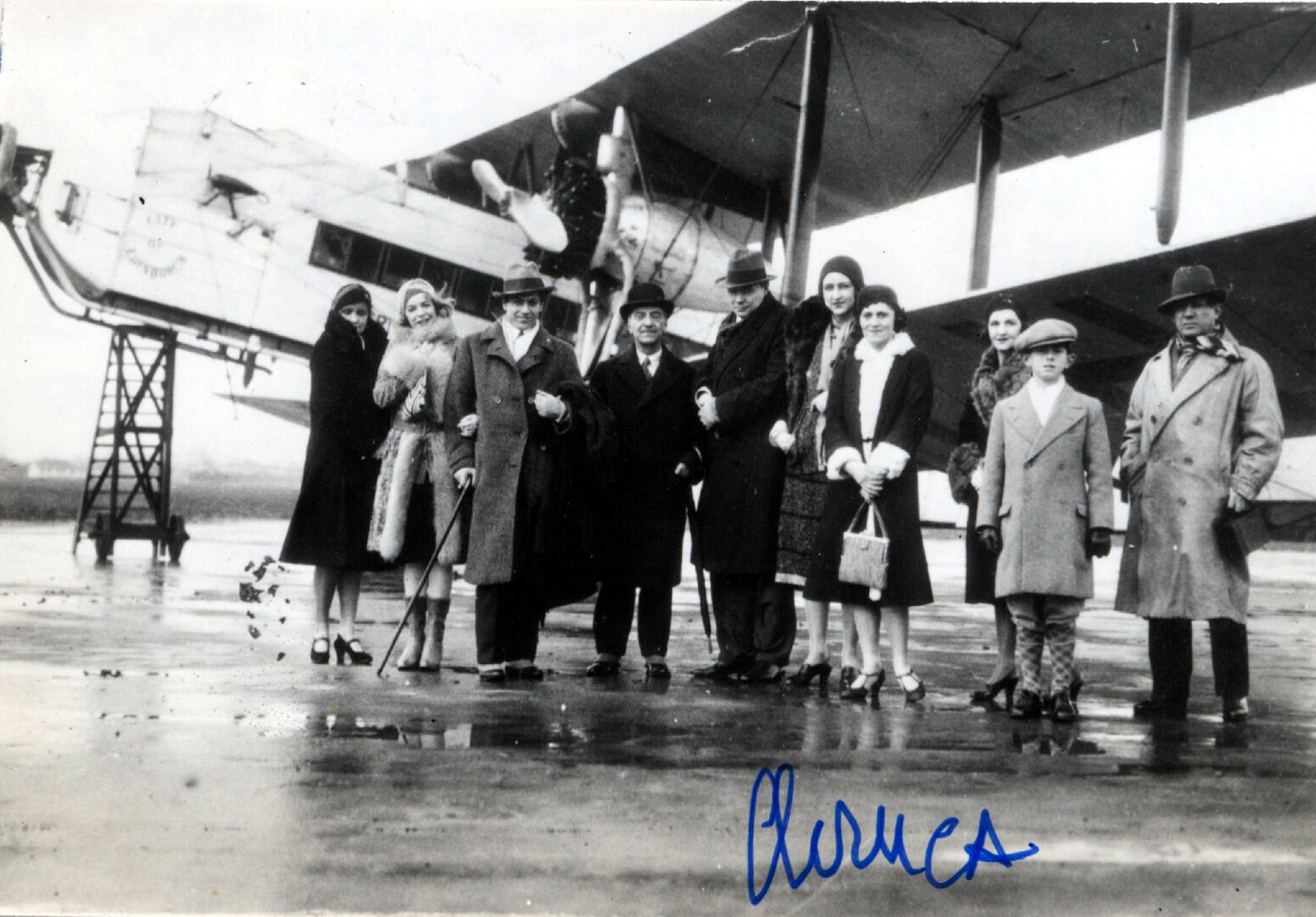
Picasso with his wife Olga Khokhlova and their son Paulo, c. 1921.

Picasso with his wife Olga Khokhlova and their son Paulo, c. 1921.

Photograph of Pablo Picasso, Olga Kokhlova and Paulo Picasso · Public Domain · Wikimedia Commons

In 1917, Picasso traveled to Rome with the writer Jean Cocteau to design sets and costumes for the Ballets Russes, the legendary company led by Sergei Diaghilev. There he fell in love with the Russian ballerina Olga Khokhlova. They married in 1918 and moved into a bourgeois apartment on the rue La Boétie. The marriage brought social respectability, financial stability, and a dramatic shift in Picasso's art.

Responding to the post-war 'Return to Order' — a widespread cultural desire for stability and tradition after the trauma of the Great War — Picasso began producing monumental, serene paintings in a classical style, depicting heavy, sculptural figures inspired by ancient Greek and Roman art. Works like Three Women at the Spring (1921) and The Pipes of Pan (1923) represent the apex of this Neoclassical phase. Remarkably, Picasso worked simultaneously in both his Neoclassical and Cubist styles, producing the monumental Three Musicians (1921) in the same summer as the classical Three Women at the Spring.

08

Surrealism, Marie-Thérèse, and Dora Maar (1925–1939)

By the mid-1920s, Picasso's marriage to Olga had become a source of profound unhappiness. His art responded with a new, violent intensity. The Three Dancers (1925) — a frenetic, anguished canvas of distorted figures — marked his abrupt entry into Surrealism. Though Picasso never formally joined the Surrealist movement, his work of this period shared its obsession with the unconscious, the erotic, and the irrational.

In 1927, he met the 17-year-old Marie-Thérèse Walter, who became his secret mistress for nearly a decade. She inspired some of his most sensual and lyrical works, including the celebrated series of 1932 paintings — Le Rêve, Nude, Green Leaves and Bust, and Girl Before a Mirror — which represent the pinnacle of his Surrealist period. In 1935, Olga discovered the affair; she and Picasso separated but never divorced. That same year, Marie-Thérèse gave birth to their daughter, Maya. Picasso then met the Surrealist photographer Dora Maar, who became his new companion and muse, inspiring the anguished, fractured portraits of the late 1930s.

09

Guernica and the Spanish Civil War (1936–1939)

On April 26, 1937, German and Italian warplanes, acting in support of Francisco Franco's Nationalist forces, bombed the Basque town of Guernica, killing hundreds of civilians. Picasso, who had been commissioned by the Spanish Republican government to create a mural for the Paris International Exposition, responded with Guernica — a massive, 11-foot-tall canvas painted entirely in black, white, and gray. Completed in less than six weeks, it is the most powerful anti-war painting in the history of art.

Guernica was exhibited at the Paris Exposition and then toured internationally to raise awareness and funds for the Spanish Republic. When asked by a Nazi officer if he had made Guernica, Picasso reportedly replied: 'No, you did.' He stipulated that the painting could not return to Spain until liberty was restored. It remained at the Museum of Modern Art in New York until 1981, when it was finally transferred to Madrid following the death of Franco and the restoration of Spanish democracy.

10

The Occupation Years and Late Career (1940–1973)

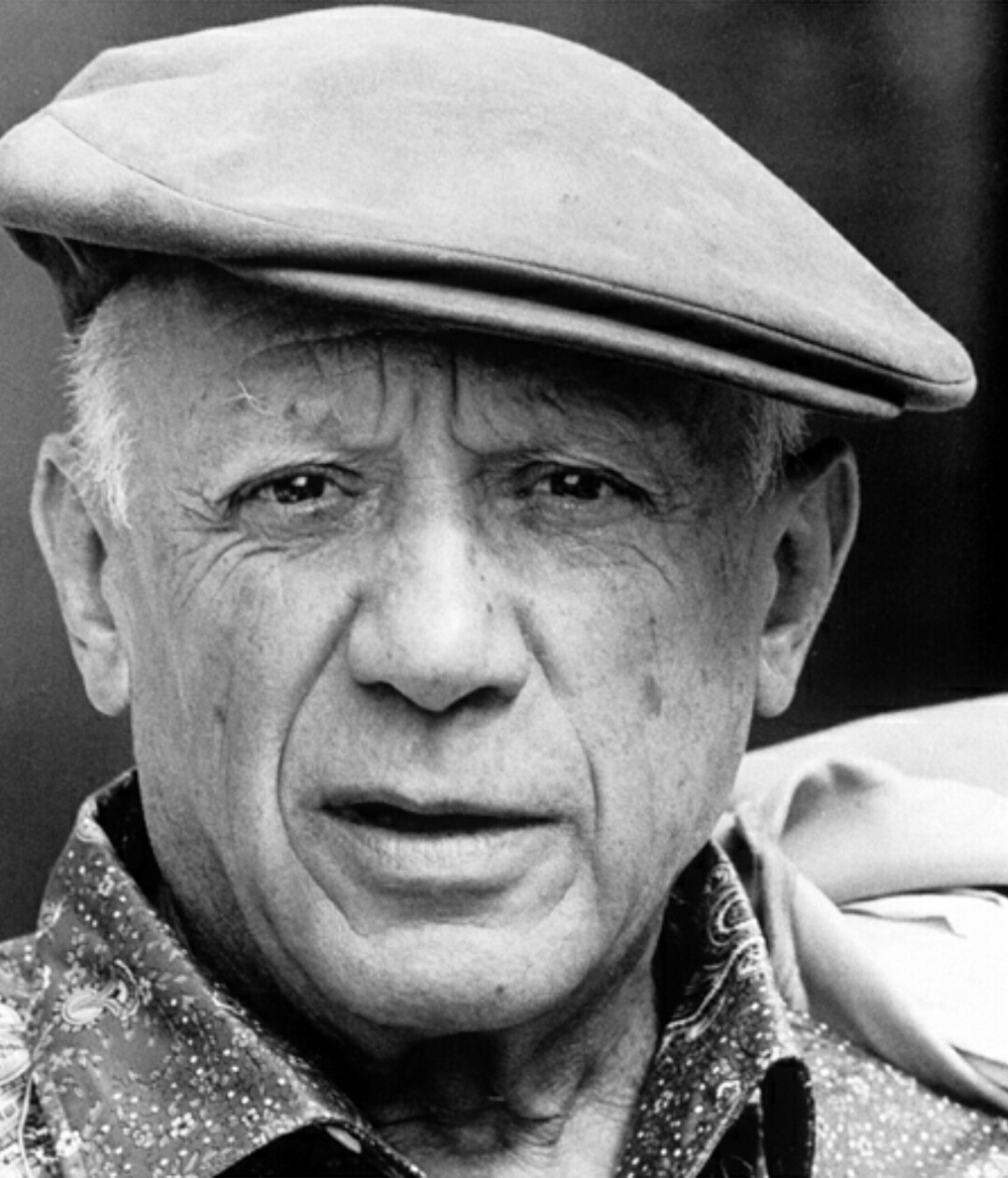
Pablo Picasso, January 1962.

Pablo Picasso, January 1962.

Argentina. Revista Vea y Lea, January 1962 · Public Domain (PD-AR-Photo) · Wikimedia Commons

During the Nazi occupation of Paris (1940–1944), Picasso remained in the city, refusing to collaborate with the German authorities. He was forbidden from exhibiting his work and was frequently visited and harassed by the Gestapo. He spent these years painting prolifically in his studio, producing some of his most somber and powerful works. In 1944, he publicly joined the French Communist Party, a membership he retained for the rest of his life.

After the Liberation, Picasso entered a final, extraordinarily prolific phase of his career. He moved to the south of France, where he worked in ceramics, sculpture, printmaking, and painting with undiminished energy. He met the young painter Françoise Gilot in 1943; they had two children together, Claude and Paloma. After their separation in 1953, he married the young Jacqueline Roque in 1961. His late works — including the Las Meninas series (1957) and the Women of Algiers series (1955) — represent a sustained, brilliant dialogue with the Old Masters. Pablo Picasso died on April 8, 1973, in Mougins, France, at the age of 91, leaving behind an estate estimated at over $500 million and a body of work comprising more than 20,000 individual pieces.

11

Legacy

Picasso in his final decade — still working prolifically until his death in 1973.

Picasso in his final decade — still working prolifically until his death in 1973.

Argentina. Revista Vea y Lea, January 1962 · Public Domain (PD-AR-Photo) · Wikimedia Commons

Picasso's legacy is without parallel in the history of modern art. He is credited with co-inventing Cubism, the most radical and influential artistic movement of the 20th century. He invented the art of collage. He was a master printmaker, sculptor, ceramicist, and stage designer. He worked across every medium and reinvented himself multiple times over a career spanning more than seven decades.

His work has set numerous auction records. In 2015, Les Femmes d'Alger (Version O) sold for $179.4 million, setting a world record for any artwork sold at auction at the time. His paintings hang in virtually every major museum in the world. The Musée Picasso in Paris and the Museu Picasso in Barcelona are dedicated entirely to his work. He remains the most recognized, most studied, and most commercially valuable artist in history — a titan whose shadow falls across every corner of contemporary art.

Sources & Further Reading

  • • Richardson, John. A Life of Picasso (4 vols.). Random House, 1991–2021.
  • • Penrose, Roland. Picasso: His Life and Work. University of California Press, 1981.
  • • Daix, Pierre. Picasso: Life and Art. Harper Collins, 1993.
  • • Musée National Picasso-Paris: museepicassoparis.fr
  • • Museu Picasso Barcelona: museupicassobcn.cat
  • • Encyclopedia Britannica: britannica.com
  • • Historical photographs: Wikimedia Commons (Public Domain). All photos pre-1928 or with expired copyright.