Analysis Tool
Compare Works
Select any two works from the collection of 500 masterpieces to compare their details, era, style, provenance, and estimated values side by side.
Work A
Work B
Side-by-Side Analysis
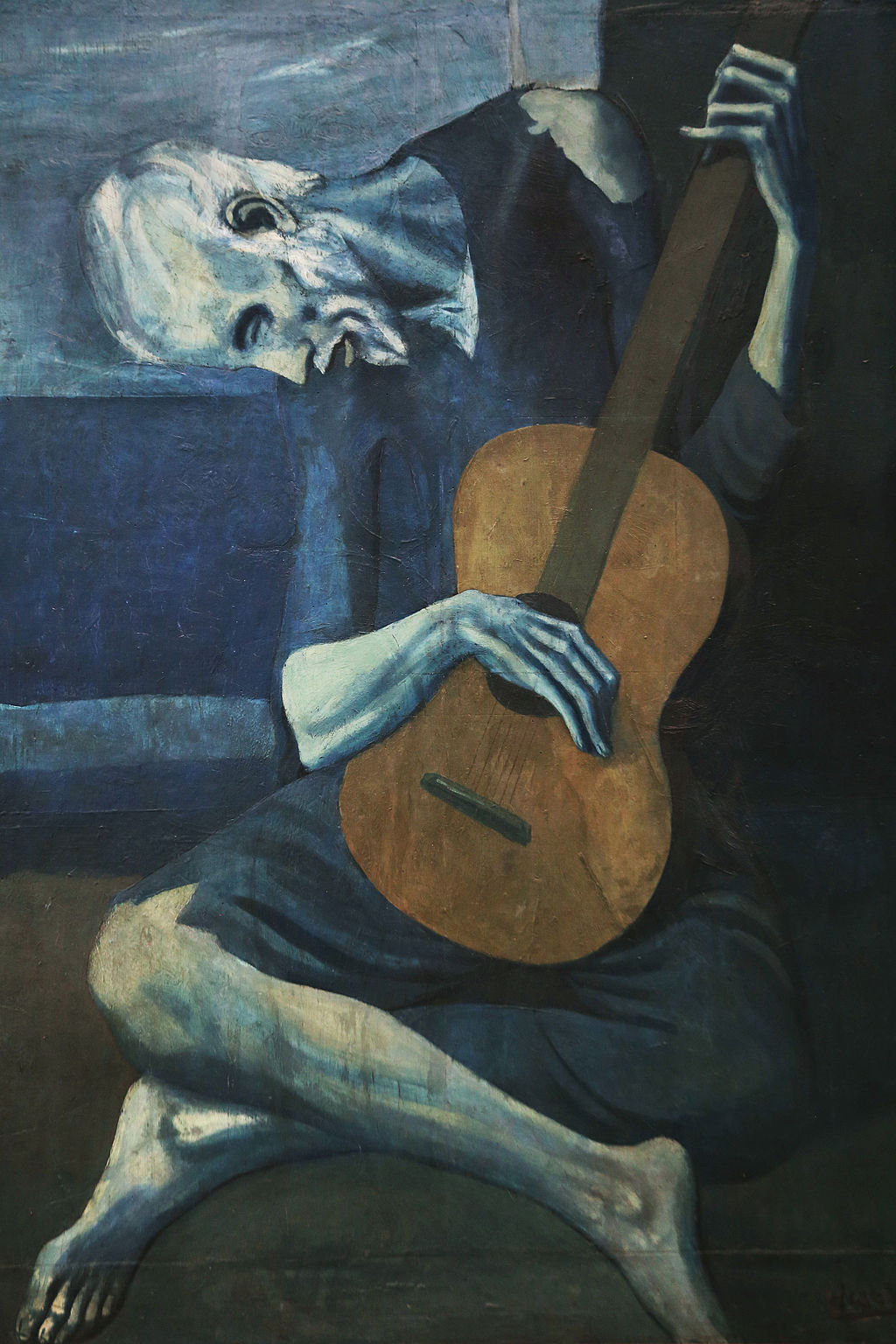
The Old Guitarist
One of the most iconic and emotionally resonant works of Picasso's Blue Period, 'The Old Guitarist' depicts a haggard, blind old man hunched over his instrument, his body contorted and elongated. The monochromatic blue palette, characteristic of this phase, profoundly emphasizes themes of poverty, isolation, and despair, reflecting Picasso's deep empathy for the marginalized. The elongated, angular forms of the figure, reminiscent of El Greco, contribute to the painting's powerful expressionistic quality, making the suffering palpable. The guitar, the man's only companion, symbolizes solace and the enduring power of art amidst profound hardship.
Painted in Madrid during a period of intense personal struggle and poverty for Picasso, this work is deeply influenced by the recent suicide of his close friend Carles Casagemas. Picasso identified profoundly with the miseries of the downtrodden, often depicting beggars, prostitutes, and the infirm during his Blue Period. 'The Old Guitarist' serves as a powerful metaphor for human existence, particularly the struggles of artists to create amidst the pressures of survival. X-ray examinations have famously revealed other figures beneath the surface of this painting, including a woman's head and a nursing mother, suggesting Picasso's practice of reusing canvases due to financial constraints and adding layers of hidden meaning to the work.
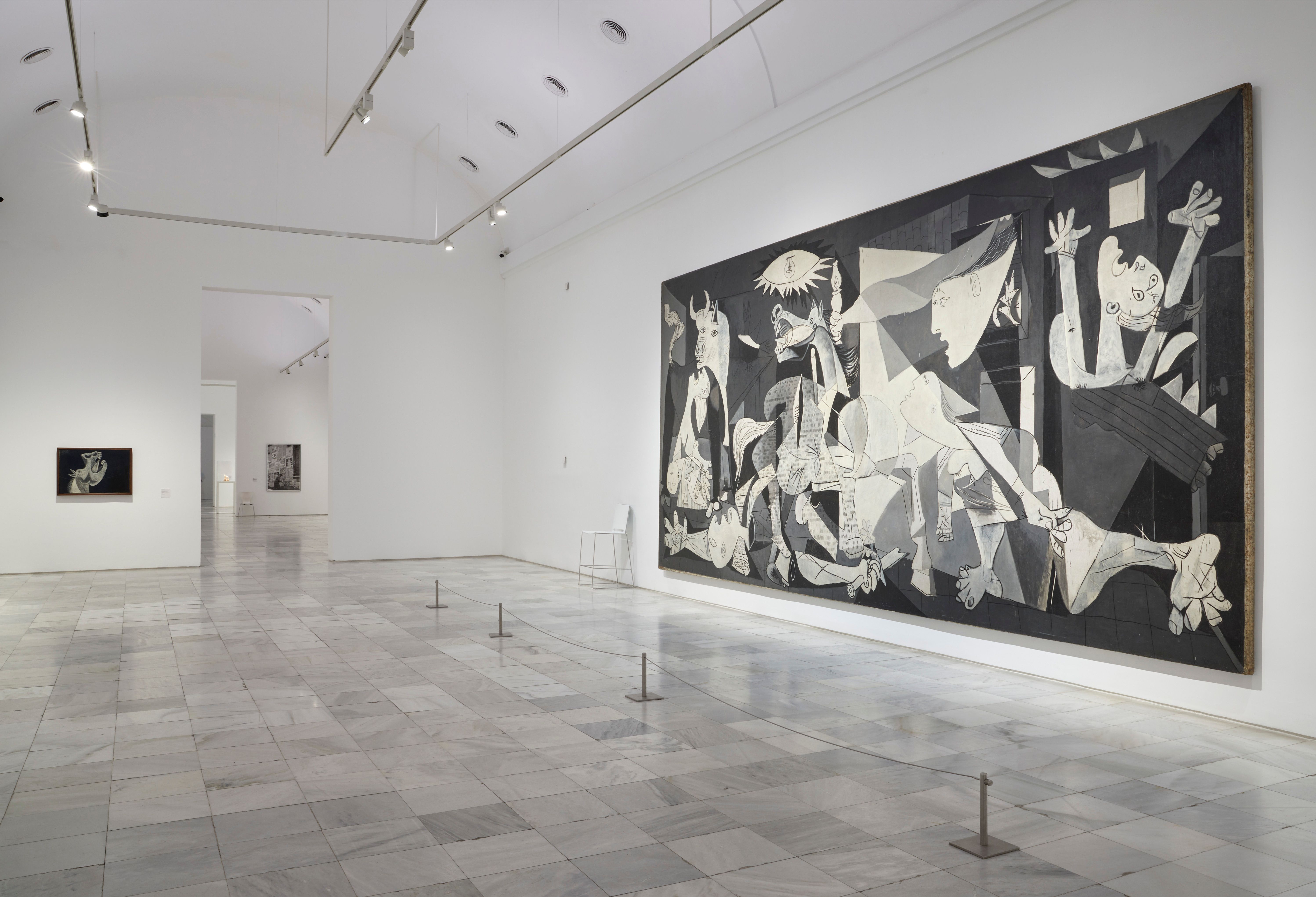
Guernica
Picasso's most famous painting and arguably the most powerful anti-war artwork ever created, 'Guernica' is a monumental mural painted in response to the horrific bombing of the Basque town of Guernica by Nazi German and Fascist Italian air forces at the behest of the Spanish Nationalists on April 26, 1937. The massive canvas is rendered entirely in a stark, monochromatic palette of black, white, and gray, intensifying its dramatic impact and universal message of suffering. It depicts a chaotic and harrowing scene of screaming women, a dead baby, a dismembered soldier, and a terrified horse, all rendered in Picasso's distinctive Cubist style, which amplifies the sense of fragmentation and despair. The painting serves as a powerful indictment of the brutality of war and a timeless symbol of peace.
Commissioned by the Spanish Republican government for the Spanish Pavilion at the 1937 Paris International Exposition, 'Guernica' immediately became a powerful political statement. Picasso, deeply affected by the news of the bombing, completed the work in a matter of weeks. He famously stipulated that the painting could not return to Spain until liberty and democracy were restored, leading to its long stay at the Museum of Modern Art (MoMA) in New York. In 1981, following the death of General Franco and the restoration of Spanish democracy, the painting was finally transferred to Spain, where it is now housed at the Museo Reina Sofía in Madrid. 'Guernica' transcends its specific historical context to remain a universal and enduring symbol of the atrocities of war and a powerful plea for peace.