Image: Artwork image rights managed by holding institution; source link provided
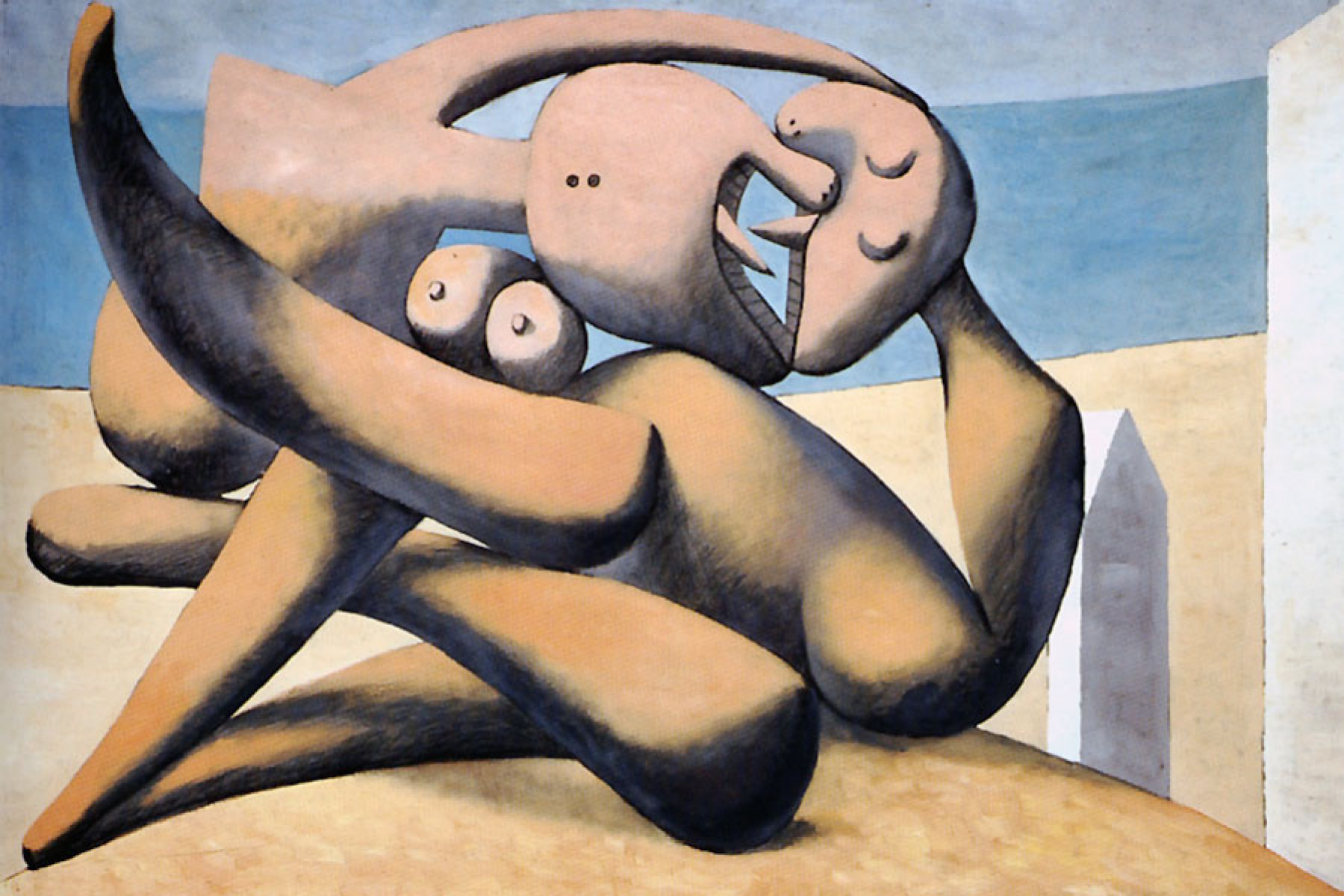
View source →Figures at the Seaside (Figures au bord de la mer)
Pablo Picasso, 1931
Technical Details
Medium
Oil on canvas
Dimensions
130 × 195 cm (51.2 × 76.8 in)
Style
Surrealism
Decade
1930s
About This Work
This large-scale oil painting by Pablo Picasso, titled Figures at the Seaside (Figures au bord de la mer), presents two monumental, biomorphic figures engaged in an enigmatic and distorted encounter against a coastal backdrop. Executed with fluid brushwork and a vibrant yet unsettling palette, the composition features rounded, bone-like anatomical structures and monstrously surreal features that merge organic and skeletal forms. The central forms evoke anthropomorphic creatures whose limbs and facial contours curve in impossible, flowing configurations. Set against the serene geometry of a horizon line and sea, the grotesque and swelling contours of the figures create a powerful visual tension between classical marine settings and psychological disquiet. Picasso masterfully manipulates scale and form to challenge traditional representation, prioritizing internal psychological states over naturalistic mimesis. The meticulous interplay of curved contours and flat planes exemplifies his radical reinvention of figuration during the early 1930s.
Painted on January 12, 1931, at Picasso's studio in Paris, Figures at the Seaside emerges from a period of intense creative output and profound personal complexity in the artist's life. During the late 1920s and early 1930s, Picasso became increasingly engaged with Surrealism, incorporating dream-like iconography, psychoanalytic themes, and metamorphic anatomy into his work. The unsettling, biomorphic distortion of the figures reflects both the subconscious anxieties of the interwar era and the tumultuous dynamics of his domestic life, notably his relationship with Marie-Thérèse Walter. The seaside motif, a recurring setting in Picasso's oeuvre originating from his summers at Dinard and Cannes, serves here as a surreal theater for irrational encounters and psychological projection. Acquired by the French state through the Dation Pablo Picasso in 1979, the painting entered the founding collection of the Musée National Picasso-Paris, establishing itself as a seminal masterwork of interwar modernism and Surrealist metamorphosis.
Current Location
Musée National Picasso-Paris, Paris, France
Public Collection — Open to visitors
Visit museum website →Collection record status
Live institutional record fetched.
Source-linked entry contains a provenance or acquisition statement; full ownership-chain claims remain limited to the cited institution.
Image access: Permission required.
Valuation & Provenance
2026 Estimated Value
Public collection / market value not asserted
* Estimates are based on comparable auction results and market analysis. Not a formal appraisal.
Last Known Sale
No public auction record — held in permanent museum collection
Keywords
Continue Exploring
Related Artworks
Chosen for shared style, era, medium, subject, or date.

Shop Related Products
If you love this surrealist period masterpiece, explore these curated books and resources on Amazon.
Picasso: A Biography by John Richardson
Comprehensive biography exploring Picasso's life and artistic evolution
The Weeping Woman Art Print
Striking Surrealist portrait from Picasso's emotional period
Picasso: A Life Documentary
Comprehensive documentary chronicling Picasso's entire artistic journey
As an Amazon Associate, we earn from qualifying purchases. Each product link is unique to help us track which recommendations resonate most with our visitors.