Image: Artwork image rights managed by holding institution; source link provided
View source →Glass, Guitar, and Bottle
Pablo Picasso, 1913
Technical Details
Medium
Oil, cut-and-pasted newspaper, charcoal, and pencil on canvas
Dimensions
65.4 × 53.6 cm (25.7 × 21.1 in)
Style
Synthetic Cubism
Decade
1910s
About This Work
Glass, Guitar, and Bottle, executed by Pablo Picasso in early 1913, is a masterwork of Synthetic Cubism and early collage. Measuring 65.4 × 53.6 cm, the mixed-media composition on canvas incorporates oil, charcoal, pencil, and cut-and-pasted newspaper clippings. The visual structure depicts familiar Parisian café objects—a stemmed glass, the neck and soundhole of a guitar, and a liquor bottle—fragmented and reassembled across intersecting planes. Picasso uses real printed text and bold black contours to juxtapose illusionistic depiction with flat, tangible material reality. The fragments of newspaper create tactile texture while simultaneously establishing an atmospheric sense of a bustling urban café. By dissolving traditional boundaries between painted space and physical ephemera, the artwork challenges conventional perspective and redefines the nature of still-life representation in modern art. The restricted chromatic palette combined with rich material layering emphasizes structural rhythm and formal innovation, inviting viewers into an intellectual and visual puzzle that revolutionized twentieth-century aesthetic expression.
Created in Paris during early 1913, 'Glass, Guitar, and Bottle' emerged at the height of the historic collaboration between Pablo Picasso and Georges Braque that birthed Synthetic Cubism. Following their pioneering experiments with papier collé in late 1912, Picasso integrated actual printed ephemera into his works to engage directly with modern urban mass culture. The inclusion of newspaper clippings reflected contemporary socio-political developments and the lively intellectual discourse in Parisian cafes. Originally held in the collection of art dealer Daniel-Henry Kahnweiler, the canvas was sequestered during World War I and sold through Hôtel Drouot in 1921. It subsequently passed through notable modernist collections, including those of Pierre Loeb and Marie Harriman, before entering the renowned Sidney and Harriet Janis Collection. In 1967, it was acquired by The Museum of Modern Art in New York. The work has since been featured in landmark exhibitions examining the genesis of modern collage, cementing its status as a pivotal artifact in the evolution of twentieth-century avant-garde art practice.
Current Location
The Museum of Modern Art, New York, United States
Public Collection — Open to visitors
Visit museum website →Collection record status
manual_institutional_review.
Source-linked entry contains a provenance or acquisition statement; full ownership-chain claims remain limited to the cited institution.
Image access: Permission required.
Valuation & Provenance
2026 Estimated Value
Public collection / market value not asserted
* Estimates are based on comparable auction results and market analysis. Not a formal appraisal.
Last Known Sale
No public auction record — held in permanent museum collection
Keywords
Continue Exploring
Related Artworks
Chosen for shared style, era, medium, subject, or date.
Glass and Bottle of Suze
1912 · same style · same era
Guitar and Bottle
1913 · same style · same era
Man with a Hat and a Violin
1912 · same style · same era
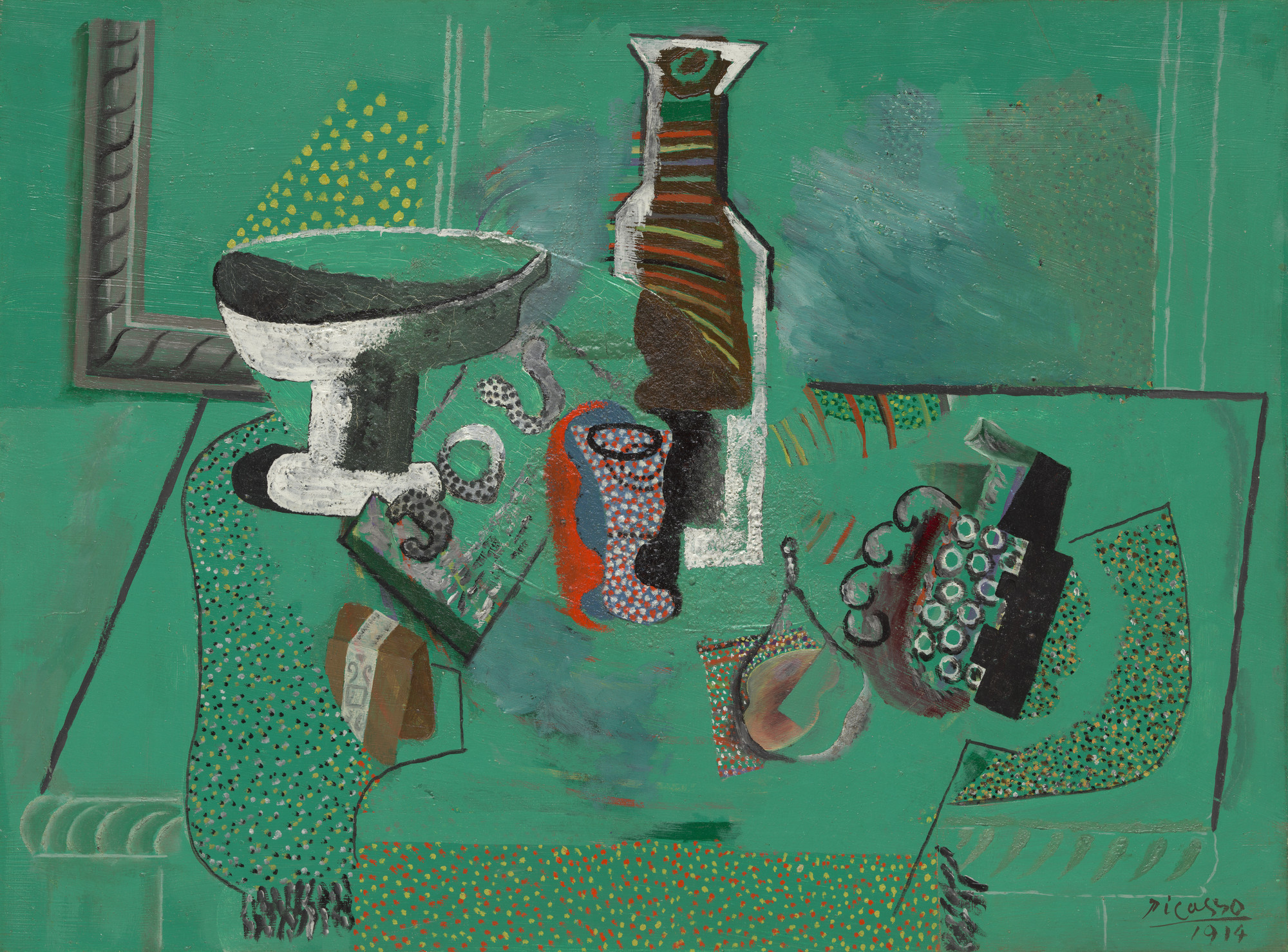
Green Still Life
1914 · same style · shared subject
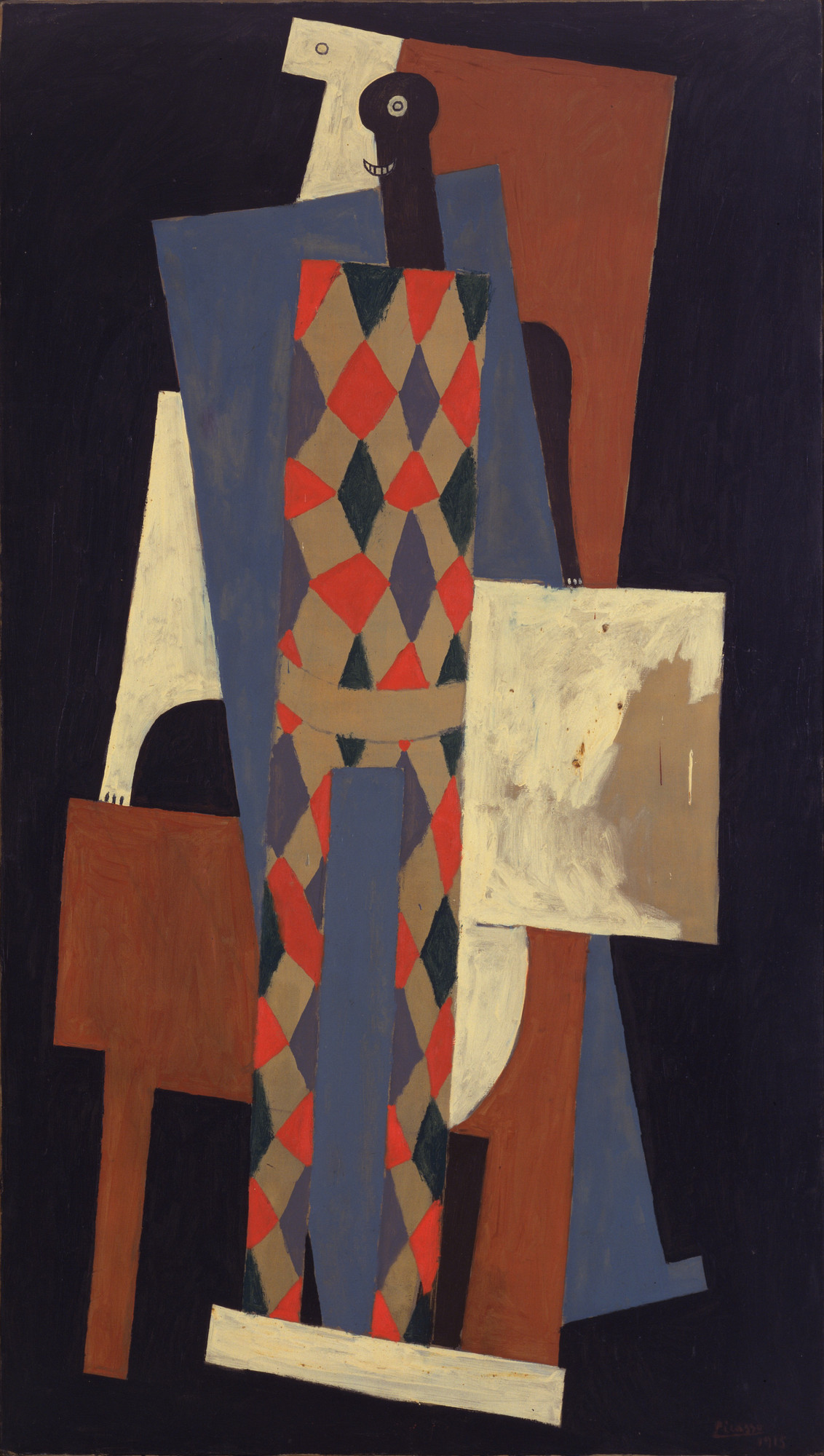
Harlequin
1915 · same style · shared subject
Guitar and Clarinet on a Mantelpiece
1915 · same style · shared subject
Shop Related Products
If you love this cubism masterpiece, explore these curated books and resources on Amazon.
Picasso: A Biography by John Richardson
Comprehensive biography exploring Picasso's life and artistic evolution
Picasso Museum Exhibition Catalogs
Official exhibition catalogs from major Picasso retrospectives
Picasso: A Life Documentary
Comprehensive documentary chronicling Picasso's entire artistic journey
As an Amazon Associate, we earn from qualifying purchases. Each product link is unique to help us track which recommendations resonate most with our visitors.